Some recipes are best approached without a ruler. These pan-fried rice paper dumplings are one of them. They are the kind of snack that happens when you have a packet of rice paper sheets in the cupboard, a leftover bowl of spiced filling in the fridge, and an evening that calls for something warm and crisp. There is no rolling pin, no dough rest, and no expectation of symmetry. The result is somewhere between a spring roll and a stuffed pancake: crunchy on the bottom, chewy at the edges, and soft in the middle where the filling has steamed itself inside the wrapper.
What is happening in the pan
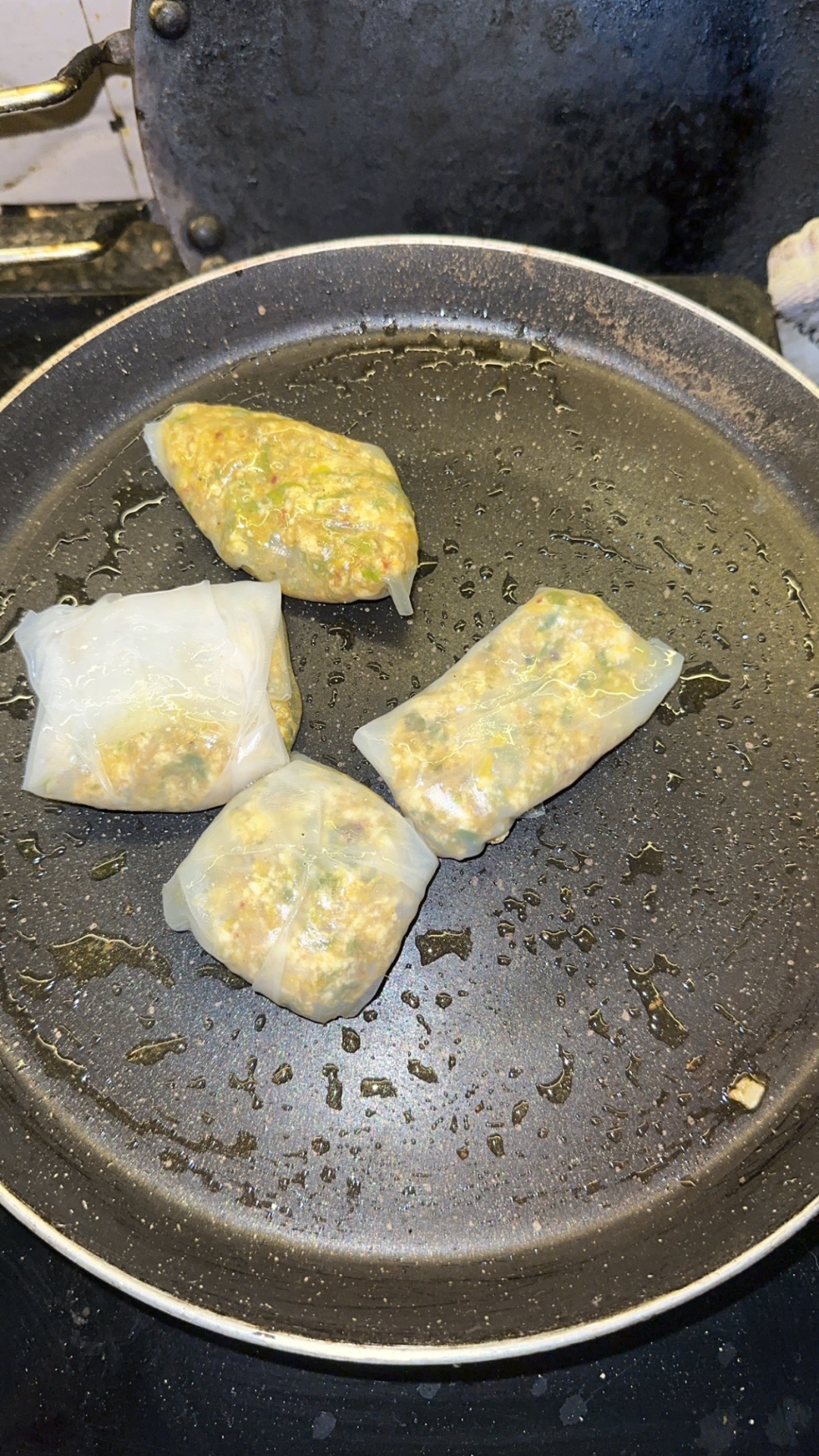
The photograph shows four parcels mid-cook on a dark, well-used non-stick pan. A thin film of oil catches the light, pooling around the dumplings and turning the rice paper from chalky white to glassy and golden. The wrappers are not perfectly sealed — one is a rough rectangle, another looks like a folded envelope, the third is a plump triangle, and the fourth has rounded itself into a half-moon. That variety is exactly what makes them homemade rather than factory-made. The heat is doing the important work: it tightens the rice paper, seals the edges, and creates tiny bubbles where the oil meets the starch.
The filling inside
Through the translucent wrappers you can see a golden, crumbly filling flecked with green herbs or chillies. The colour suggests paneer that has been scrambled or grated, mixed with finely chopped vegetables and a warm spice blend. The texture looks moist but not wet — the kind of filling that holds together when you bite, rather than leaking into the pan. There are hints of red and yellow, maybe turmeric or chilli powder, and the green flecks could be coriander, mint, or spring onion. It is the sort of everyday Indian stuffing that turns a plain rice paper sheet into something you want to eat straight from the pan.
Why rice paper works
Rice paper is forgiving in a way that wheat dough is not. A quick dip in warm water makes it soft and sticky; thirty seconds later it is ready to fold. It does not need to be kneaded, and it does not tear easily if you are gentle. Once it hits the pan, the starch on the surface crisps and the parcels hold their shape. The neutral taste of rice paper also lets the filling shine — the wrapper is there for crunch and structure, not to compete with the spices inside.
The cook so far
The pan in the background — a larger, darker pot or pressure cooker — gives the scene a real kitchen feel. This is not a styled food shoot; it is a weeknight cook in progress. The dumplings are spaced apart so they do not steam each other, and the oil is generous enough to coat the base without drowning them. The surfaces are just beginning to colour, which means they are probably a minute or two away from being flipped. The right balance is to keep the heat medium-low: hot enough for a crisp crust, low enough for the filling to warm through before the wrapper burns.
How to eat them
- Serve them straight from the pan while the edges are still crisp.
- Dip into green chutney, schezwan sauce, or a simple yoghurt-and-chilli mix.
- Eat with your hands — the wrappers are thin enough to bite cleanly.
- Pair with chai in the evening or a light salad for a fuller meal.
- Make extra filling; these disappear faster than you expect.
A few practical notes
If you try this at home, do not overfill the sheets. Rice paper is strong when wet but will split if the filling bulges. Seal the edges by pressing them firmly; the starch acts as its own glue. Work quickly once the sheet is softened, because it becomes sticky and hard to reshape as it dries. And do not crowd the pan — these dumplings need space to fry, not stew. If you want extra crunch, add a little more oil to the pan and finish on a slightly higher heat for the last thirty seconds.
Verdict
A quick, comforting snack that uses up leftover filling and turns it into something crisp and addictive. Perfect for chai time, imperfect in the best way, and proof that you do not need a perfect shape to make a perfect bite.