Why Kesar Rice, Always
Kesar rice, or saffron rice, isn't just a side dish in my kitchen — it's an event. The moment those golden saffron strands hit warm milk or ghee and start bleeding their color into the liquid, I know something special is about to happen. There's something almost meditative about watching plain basmati rice transform into this fragrant, amber-hued dish, studded with caramelized onions, toasted nuts, and fresh coriander.
How I Make It
I always start with good basmati rice — long grain, aged, the kind that fluffs up beautifully and doesn't turn mushy. The rice gets soaked first, then cooked separately until each grain is just tender, not sticky. While that's happening, I bloom my saffron strands in a little warm milk, letting the color and aroma slowly seep out.
The real magic, though, happens in the pan. I slice onions thin and fry them low and slow until they turn deep amber and crisp at the edges — this is non-negotiable for me. Those crispy fried onions are the backbone of flavor in this dish, adding sweetness and a slight caramelized bitterness that balances everything else.
Once the rice is ready, I layer it into a wide kadai with the saffron milk drizzled generously over the top, letting it seep unevenly so you get pockets of deep golden rice next to paler, more delicately scented grains. That contrast is what makes each spoonful a little different from the last.
Then comes the toppings — and this is where I go a little overboard, happily. A generous handful of cashews, almonds, and walnuts, lightly toasted in ghee until golden, get scattered over the rice along with more of those crispy fried onions. Finally, a shower of freshly chopped coriander leaves goes on top, adding a pop of green and a hit of freshness that cuts through the richness of the ghee and nuts.
I let everything sit on low heat for a few minutes, covered, so the flavors meld together and the rice takes on that final layer of aroma from the saffron and toasted nuts resting together.
The Result
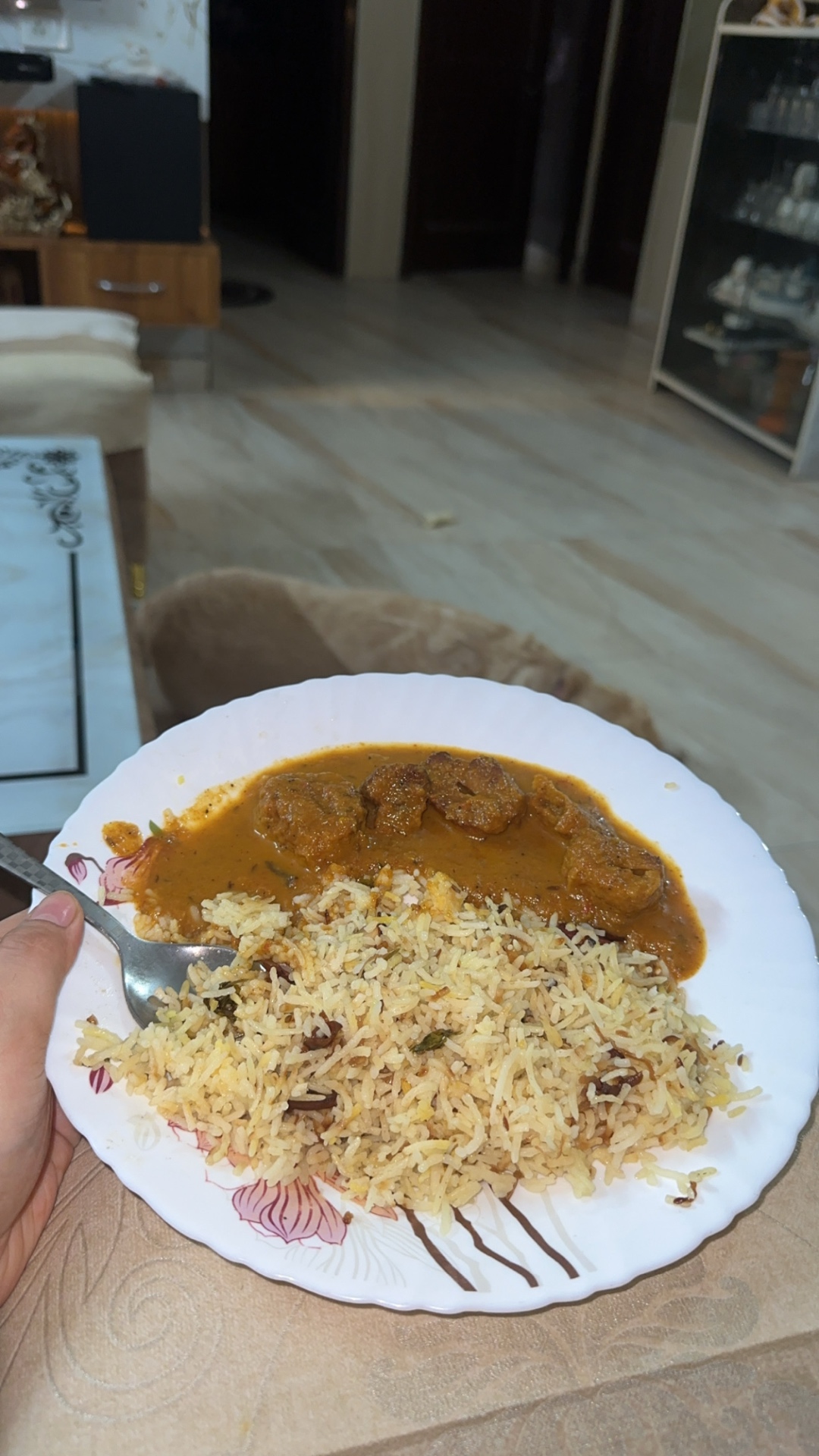
What comes out is a pan of rice that looks almost too pretty to eat — golden and pale grains mingling together, dark caramelized onion shreds threaded through, nuts peeking out here and there, and specks of green coriander scattered like confetti. The aroma alone is enough to pull everyone into the kitchen before it's even reached the table.
The taste matches the visual drama. Each bite gives you something different — the sweet, almost floral note of saffron, the crunch of toasted nuts, the caramelized depth of fried onions, and the freshness of coriander tying it all together. It's rich without being heavy, fragrant without being overpowering.
Why I Keep Making It
Kesar rice has become my go-to when I want a dish that feels celebratory without requiring an elaborate menu. It pairs beautifully with a simple raita or a rich curry, but honestly, I've eaten it just on its own, straight from the pan, more times than I'd like to admit.
If you haven't tried making kesar rice at home, I'd say start with good saffron and patience for those fried onions — everything else falls into place after that. It's one of those recipes that rewards a little extra care with a dish that feels like a celebration on a plate.
About the Author
Kirandeep Kaur
I explore technology, simplify complex ideas, and share what I learn along the way — mostly SAP, AI and enterprise tech, sometimes everything else.
More about Kirandeep →